











Electric mobility does not change driving in one dramatic moment. It changes it through repetition. The small decisions that used to be automatic become conscious: when to stop, where to plug in, how long to wait, and whether the next location supports the right connection.
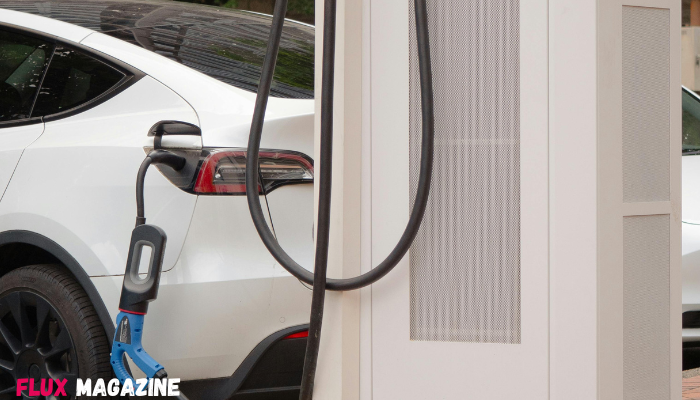
At the centre of that shift is a surprisingly unremarkable object, the EV charging cable. It is the point where infrastructure becomes personal action. And with the rise of the Type 2 EV charging cable as the dominant European standard, that interaction has become consistent enough to shape new habits rather than disrupt old ones.
From refuelling to recharging as a habit
Traditional driving behaviour was built around short, infrequent interactions with fuel stations. You drive until the tank is low, stop for a few minutes, and continue.
Electric mobility replaces that rhythm with a more distributed pattern. The EV charging cable introduces the concept of constant readiness rather than periodic refuelling.
Instead of reacting to scarcity, drivers begin to anticipate energy needs. Charging becomes something that happens at home overnight, at work during the day, or during longer stops. This creates a subtle but important shift in mindset: energy is no longer something you “get when needed” but something you continuously manage.
The Type 2 EV charging cable plays a key role here. Because it is widely standardised, drivers can plug in across most public and residential charging points without uncertainty. That consistency reinforces habitual behaviour rather than spontaneous decision making.
Planning becomes a core part of driving
One of the most significant behavioural effects of EV adoption is the rise of pre trip planning.
Where drivers of combustion vehicles rarely think about fuel logistics, EV drivers often consider:
- Where will I charge?
- How long will it take?
- Do I have the correct EV charging cable available?
- Is the destination compatible with a Type 2 EV charging cable connection?
This planning behaviour becomes second nature over time. It influences not only long journeys but also everyday decision making, such as choosing parking locations or scheduling errands.
The EV charging cable acts as a physical reminder of this planning process. Unlike fuel nozzles, it is personal, often carried in the vehicle, and requires deliberate handling.
The psychology of range awareness
Electric driving introduces a new cognitive layer: continuous energy awareness.
Drivers begin to monitor battery levels more frequently than they ever monitored fuel tanks. This is not purely technical behaviour. It is psychological adaptation.
The presence of an EV charging cable reinforces this awareness. It represents both security and limitation. Having access to charging reduces anxiety, but only if infrastructure is reliable and compatible.
The Type 2 EV charging cable standard reduces friction in this system. By ensuring compatibility across a large portion of European charging infrastructure, it reduces the mental load associated with uncertainty. Over time, this helps normalize electric driving as a predictable behaviour rather than a cautious one.
Home charging and the rewiring of routine
Home charging is where behaviour changes become most visible.
With a dedicated EV charging cable at home, refuelling is no longer an active task. It becomes part of domestic routine, similar to charging a phone or running appliances overnight.
This changes the emotional relationship with driving. Instead of planning stops at external stations, drivers integrate energy management into household habits.
The Type 2 EV charging cable is particularly important in this context, as it is widely used for both home wall units and public charging systems. This dual role reinforces continuity between private and public charging behaviour, reducing friction between environments.
Public charging and social behaviour
Public charging introduces a different behavioural layer: spatial awareness.
Drivers begin to interpret urban environments differently. Parking spaces are no longer neutral. They are evaluated based on charging availability, compatibility, and expected dwell time.
The EV charging cable becomes part of a shared public experience. It is no longer just a private accessory but a connector in a distributed infrastructure network.
This also creates subtle social patterns. Drivers may wait near their vehicles while charging, plan activities around charging time, or coordinate errands with charging sessions.
Control, convenience, and the illusion of simplicity
At first glance, electric mobility appears simpler. No fuel stations, no emissions at point of use, fewer mechanical interactions.
However, behavioural complexity shifts rather than disappears.
The EV charging cable introduces a new form of control. Drivers must manage access to energy rather than simply purchase it on demand. This creates a sense of ownership over energy flow, particularly when combined with home charging systems.
Yet this control is balanced by dependence on infrastructure. Without compatible charging points and standards like the Type 2 EV charging cable, the system becomes fragmented and stressful. With it, behaviour stabilises.
The cable as a behavioural interface
The transition to electric mobility is not defined solely by vehicles. It is defined by interaction patterns, routines, and expectations.
The EV charging cable is the most direct interface between driver and energy system. It shapes when people travel, how they plan, and how they perceive mobility itself.
The widespread adoption of the Type 2 EV charging cable has reinforced this transformation by reducing uncertainty and enabling predictable behaviour across Europe.
In the end, the most important shift is not technological but behavioural. Driving is no longer just about movement. It is about managing a continuous relationship with energy, mediated through a simple but powerful object.






Show Comments (0)