












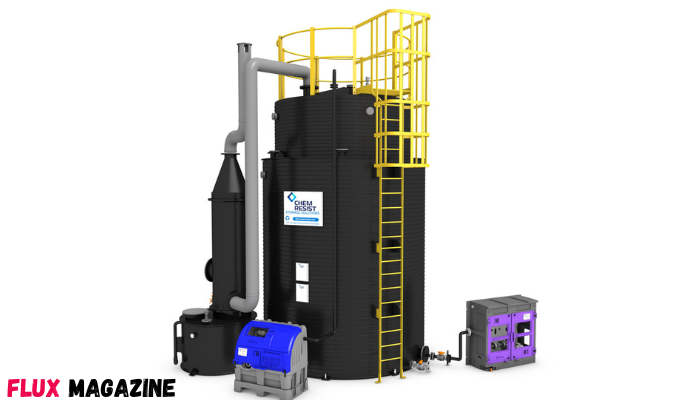
If you are looking for a new chemical storage tank, there are a few options on the market for you to consider. It is best to look at the pros and cons of them all to make an informed choice for your facility.
The two main materials commonly used in the manufacture of chemical storage tanks are thermoplastic and steel. Steel tanks are all manufactured using mild steel because it is a cost-effective and easy-to-work-with material, which is robust and suited for storing chemicals.
Thermoplastic Chemical Storage Tanks, like those produced by manufacturer Chem Resist, are made using a spiral wound method, where thermoplastic is melted onto a large cylinder, creating a seamless tank which prevents leaks.
When looking at appropriate storage solutions for your chemicals, there are a few things you should consider, such as the corrosive nature of the chemicals you’re storing, the volume of liquid, and the lifespan of the tank you’re going to store them in. Deciding which manufacturing material to choose for your chemical storage tanks should depend on your specific needs, keeping your budget and your business in mind.
Advantages of Thermoplastic Chemical Storage Tanks
Naturally corrosion-resistant
Thermoplastic chemical storage tanks are corrosion-resistant both internally and externally, as thermoplastic is naturally non-corrosive. Thermoplastic storage tanks are ideal for housing corrosive acids, like hydrochloric and sulphuric acid, due to the chemical and corrosion-resistant nature of thermoplastic. Being corrosion-resistant means you remove the risk of the tank rusting or degrading, which can happen with metal tanks if the wrong chemical is stored inside.
Environmentally friendly
Thermoplastic chemical storage tanks are made from a type of plastic, which doesn’t scream environmentally friendly. However, they actually generate a lower carbon footprint when compared to other available tank technologies – including stainless steel tanks. At the end of their 20-year lifespan, thermoplastics can be fully recycled into small pellets that can be used to make other products, including low-pressure industrial pipes.
Minimal maintenance
Chemical storage tanks made from thermoplastic require less maintenance than their steel counterparts due to the long lifespan of plastic. They can begin to degrade if they’re exposed to UV rays, but they have a typical design life of 20 years or more.
Low-cost solution
The cost of installing a thermoplastic tank is relatively cheap, and they have a much lower initial purchase cost when compared to other tanks on the market, making them a cost-effective long-term chemical storage solution.
Large capacity
Spiral wound thermoplastic storage tanks can be designed and manufactured to meet specific requirements and dimensions. Manufacturers like Chem Resist have the capabilities to create thermoplastic chemical storage tanks that are 4.2m in diameter and have a 125,000L capacity.
Lightweight
Thermoplastic is a lightweight material, which makes the chemical storage tanks easier to transport and install, even in small areas. They do sometimes need specialised housing and support structures to keep them from expanding or contracting in extreme temperatures, but these can often be purchased alongside your chemical storage tank and fitted at the same time to avoid any issues.
Additional features
The construction of thermoplastic chemical storage tanks offers multiple customisation options that can be combined to create a tank that meets all your requirements. The base of the tank can be constructed as flat, sloped, or coned, and rain skirts can be added to the tank for additional protection for outdoor chemical storage. Depending on the location and required specifications of your tank, improved access options can be added, including ladders, handrails and roof strengthening.
Advantages of Stainless Steel Chemical Storage Tank
On-site build
The construction methods of a stainless steel chemical storage tank enable manufacturers to give customers the option to have their large tanks for chemicals built on-site, at their own location. Having tanks built on-site saves transportation costs and allows the client to oversee the construction and placement of the tank.
Height and width choices
Stainless steel chemical storage tanks can be manufactured in either a vertical or horizontal position, depending on the location of your tank and the capacity you require. Having this option allows you to utilise the space on your site efficiently, as you can build up or out depending on the tank’s capacity requirements.
Insulation
The surface of your stainless steel chemical storage tank can be insulated using large sheets of polyurethane foam, mineral wool, foam glass, or stainless steel or aluminium cladding. These methods of insulation can also be fully welded to your chemical storage tank or detachable to allow for cleaning and inspection access.
Insulating your chemical storage tanks can reduce energy loss by up to 40% and help keep your product at a stable temperature to optimise performance in your systems.
Weather resistant
Stainless steel tanks are resistant to the elements, even harsh weather conditions. But they do require insulation if you’re storing chemicals in freezing temperatures. With added insulation, your tank will be protected against the elements as well as heat, UV, wind, and rain.
Strength
Stainless steel tanks are known for their strength, durability, and non-corrosive properties. There are different types of steel which are used in chemical storage tank production. For example, AISI 304L steel is highly resistant to most oxidising acids, while AISI 304 stainless steel is most effective to protect the ideal tank material for storing organic chemicals, dyes, sterilisation solutions, and inorganic chemicals.
Chemical compatibility
The inside of your chemical storage tank must be compatible with the chemical being stored. For highly corrosive acids, like hydrochloric or sulphuric acid, you will need a specific grade of stainless steel to prevent internal corrosion issues. High-alloy stainless steel tanks are able to store corrosive and hazardous substances without issue.
Additional features
Like thermoplastic tanks, stainless steel chemical storage tanks have the added benefit of being manufactured with railings, ladders, landings, and other infrastructure elements without compromising the size of your tank.
Chemical storage solutions
If you are still unsure which chemical storage solution is the right one for you or your clients, most tank manufacturers will happily discuss your options with you. Manufacturers will understand the industry regulations and work towards a suitable chemical storage solution that works with you and the chemicals you work with.







Show Comments (0)