











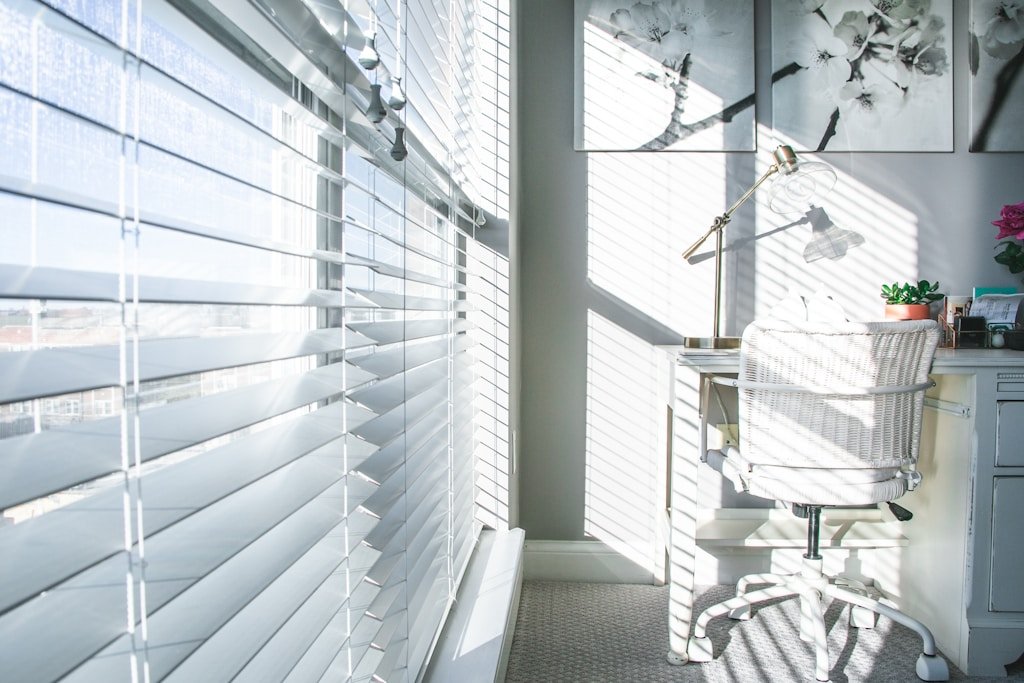
Real timber venetian blinds have a warmth and texture that few other window dressings can match, but that same natural material comes with a set of practical drawbacks that only become apparent after living with them for a while – warping in humid rooms, fading in strong sunlight, and a price tag that puts many homeowners off before they even reach the fitting stage. Faux wood blinds were developed specifically to close this gap, offering the visual character of timber without inheriting its most common weaknesses.
What faux wood slats are actually made from
Faux wood venetian blinds are typically manufactured from a PVC composite or a similar synthetic material, engineered and finished to closely mimic the grain, texture, and colour variation of genuine timber. Modern manufacturing techniques have narrowed the visual gap considerably, to the point where many faux wood slats are difficult to distinguish from real timber at a normal viewing distance, particularly once the blind is mounted and the individual slats are seen as part of the whole window rather than up close.
Why moisture resistance changes where a blind can go
- kitchens – steam and splashes that would warp real timber over time
- bathrooms – consistently high humidity unsuitable for genuine wood
- conservatories – temperature swings and condensation typical of glazed spaces
Real timber blinds are generally discouraged in these environments precisely because sustained exposure to moisture causes the wood to warp, crack, or discolour over time, whereas faux wood shrugs off the same conditions without any change in appearance, opening up rooms that would otherwise be off-limits for a genuine wood aesthetic.
How faux wood compares on weight and durability
Somewhat counterintuitively, faux wood slats are often heavier than real timber slats of the same size, which actually works in their favour by making the blind hang straighter and resist the slight bowing that lightweight timber slats can develop over long spans. The synthetic material also resists scratching and denting better than softer timber species, an advantage that matters more than it might seem in households with children or pets regularly brushing past the blind.
When a slat-free alternative might suit the room better
Venetian blinds, faux wood or otherwise, are not the right fit for every taste – some homeowners simply prefer the flat, uninterrupted look of a single fabric surface over horizontal slats, particularly in more minimalist interiors where clean lines matter more than the textured warmth a wood-look finish provides. For anyone drawn to the practical benefits described above but not to the slatted aesthetic itself, it is worth knowing that similar light-and-privacy flexibility exists in an entirely different format.
Households wanting that same adjustable balance between light and privacy without any slats at all often look instead at https://kellysblinds.co.uk/double-roller-blinds/, which pairs a sheer and an opaque fabric on one smooth roller rather than relying on individual horizontal pieces.
Where the price difference comes from and what it buys
Faux wood blinds typically cost less than genuine timber equivalents, a difference that reflects both the lower cost of the raw material and the more consistent, automated manufacturing process compared with the careful selection and finishing required for real wood slats. For homeowners furnishing several rooms at once, this price gap can make the difference between fitting every window with a wood-look finish or reserving timber for just one or two feature rooms.
A full range of finishes designed to replicate popular timber tones is available at https://kellysblinds.co.uk/venetian-blinds-extended/fauxwood/, covering everything from pale oak to darker walnut effects.
Frequently Asked Questions About Faux Wood Venetian Blinds
Can faux wood blinds fade in direct sunlight like real timber can?
They are generally more resistant to fading than real wood, since the synthetic material is engineered with UV-resistant properties, though extremely prolonged, intense sun exposure can still cause gradual colour change over many years, as with most materials.
Do faux wood blinds feel noticeably different to the touch compared with real wood?
There is a subtle difference in texture that some people notice on close inspection, though most find it difficult to distinguish once the blind is hanging at a normal viewing distance rather than being handled directly.
Are faux wood blinds suitable for very large windows?
Yes, and their slightly heavier weight compared with real timber can actually be an advantage on larger spans, helping the slats hang straighter and resist the bowing that can affect lighter materials over a wide window.
How do faux wood blinds compare in terms of cleaning and maintenance?
They are generally easier to maintain than real wood, since the synthetic slats can be wiped down with a damp cloth without the risk of water damage or warping that comes with cleaning genuine timber in the same way.






Show Comments (0)